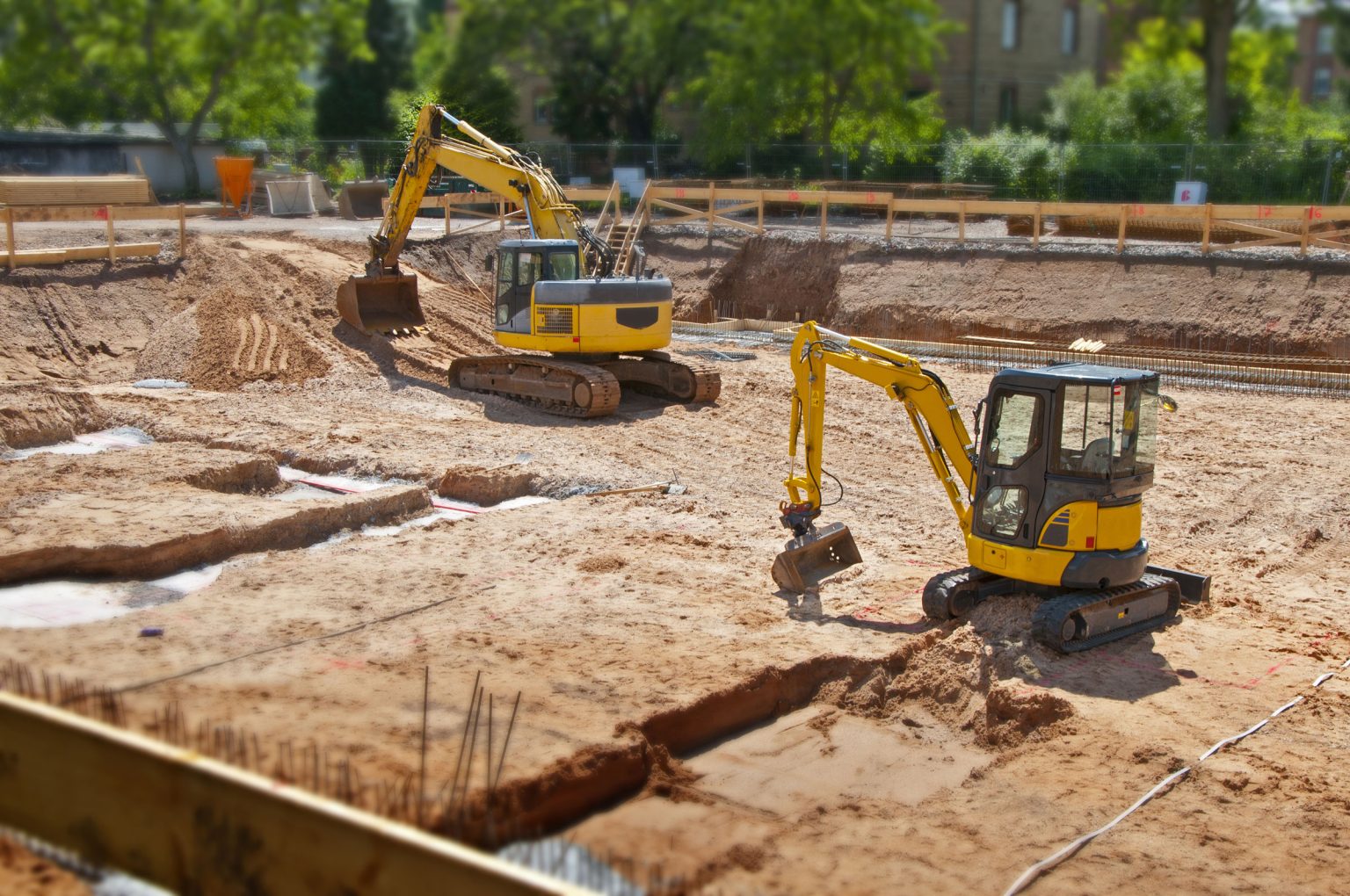


Foundation earthworks involves the initial excavation and preparation work done on a construction site to create a stable and level base for building foundations. This step is critical to ensure that the structure built on top is secure, durable, and able to withstand the forces it will be subjected to over time.
What’s involved:
- Excavation:
- Trenching: Trenches are dug to the required depth for footing or foundation walls. This is done according to the building plans and the type of foundation required (e.g., shallow or deep foundations).
- Soil Removal: Excess soil is removed, and the depth of excavation is verified to ensure it meets engineering specifications.
- Underground Services: If required, spaces for plumbing, drainage, or electrical services are also excavated.
- Soil Compaction:
- Compaction of the subgrade: After excavation, the soil beneath the foundation is compacted to increase its load-bearing capacity. Poor soil compaction can lead to settlement or shifting of the foundation.
- Use of mechanical compactors: Various machines like rollers or compacting plates are used to compact the soil.
- Backfilling: Once the foundation is in place (whether it’s concrete footings, piles, or slab foundations), the area around the foundation may need to be backfilled with soil or other materials to fill voids and provide additional support.
- Grading: Proper grading is essential to ensure that water doesn’t accumulate around the foundation, which can lead to erosion or structural issues. Sloping the ground away from the foundation helps in directing rainwater to proper drainage systems.
- Subgrade Preparation: For certain types of foundations, such as those built on unstable or soft soil, additional work may be needed to stabilize the ground. This could involve using geotextiles, soil stabilization agents, or even installing piles to reach more stable ground.