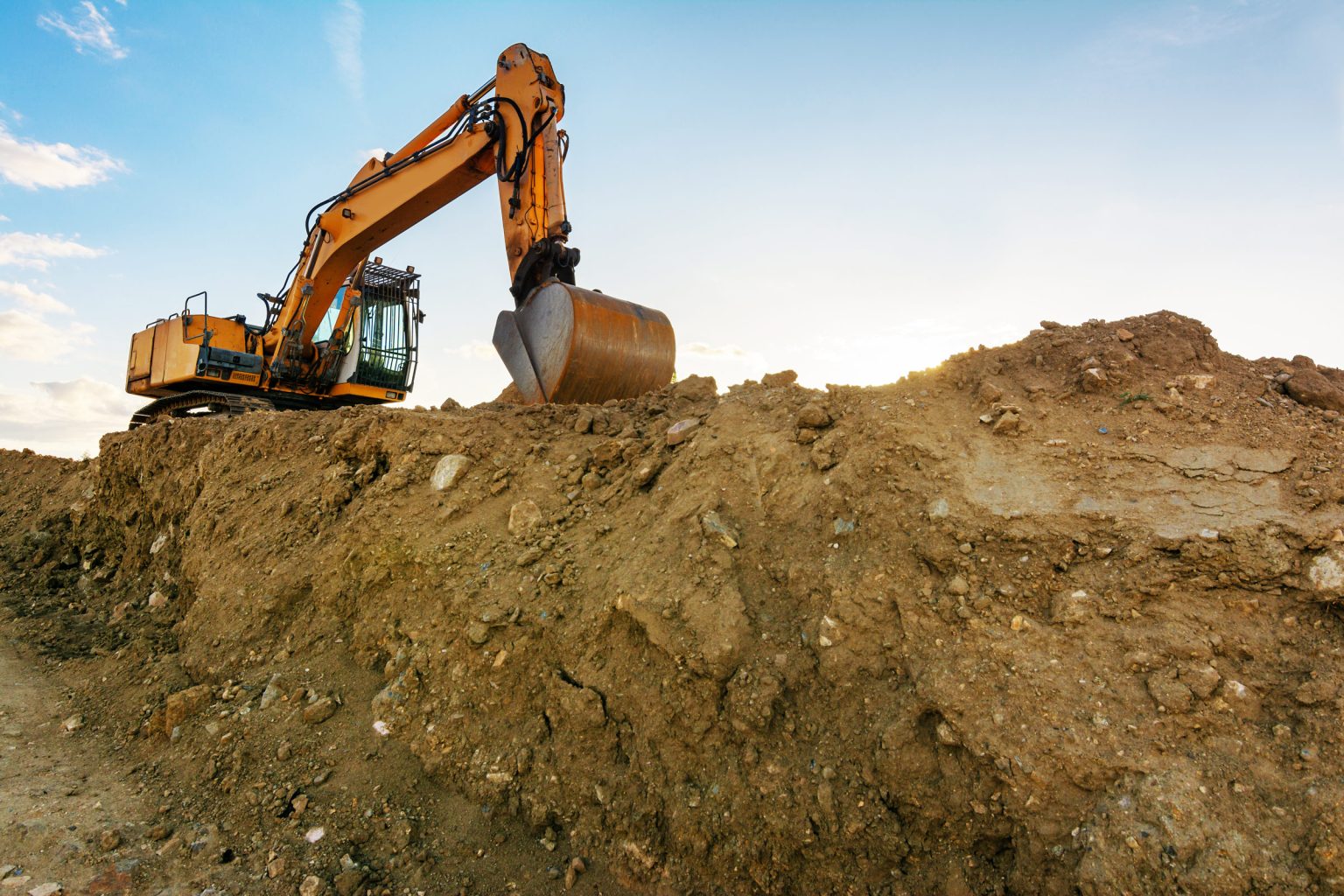


With general earthworks, soil, rock, and other natural materials on a construction site are moved, removed, or modified to prepare the land for further development. It is an essential part of many projects, ensuring stability, enabling drainage, and clearing the way for further construction.
What’s involved:
- Excavation: Digging and removing soil or rock to create trenches, foundations, basements, or other spaces required for the project. Excavation can also be used to level or shape the land. View more about our Excavation services.
- Filling: Adding soil or other materials to an area to raise the ground level, fill depressions, or provide a stable base for construction. This could involve bringing in imported materials or utilising on-site soil.
- Grading: The process of levelling and smoothing the surface of the land to ensure a proper slope for drainage and a stable base for construction. Grading ensures that the ground is even, and the right amount of slope is provided to direct water away from structures.
- Compaction: After excavation or filling, the soil is compacted to increase its density and stability. Compaction is essential to prevent future settlement of the ground and ensure the structural integrity of the construction. View more about our Foundation Earthworks services.
- Trenching: Digging narrow, deep channels to install utilities, drainage systems, or foundation footings. Trenches are often required for sewer lines, water pipes, or electrical cables. View more about our Trenching services.
- Site Clearing: Removing vegetation, trees, debris, or obstacles that might interfere with construction. This is often done before excavation or grading begins. View more about our Site Clearing services.
- Shaping or Cutting: Modifying the land’s topography, such as cutting into hills or filling in valleys to make the land suitable for development.